PhishFlagger - Website

Detailed case study is coming soon
Title:
Creative Consultant / Director
Tenure Duration:
Ongoing advisor
Project Duration:
Summer/Fall 2025
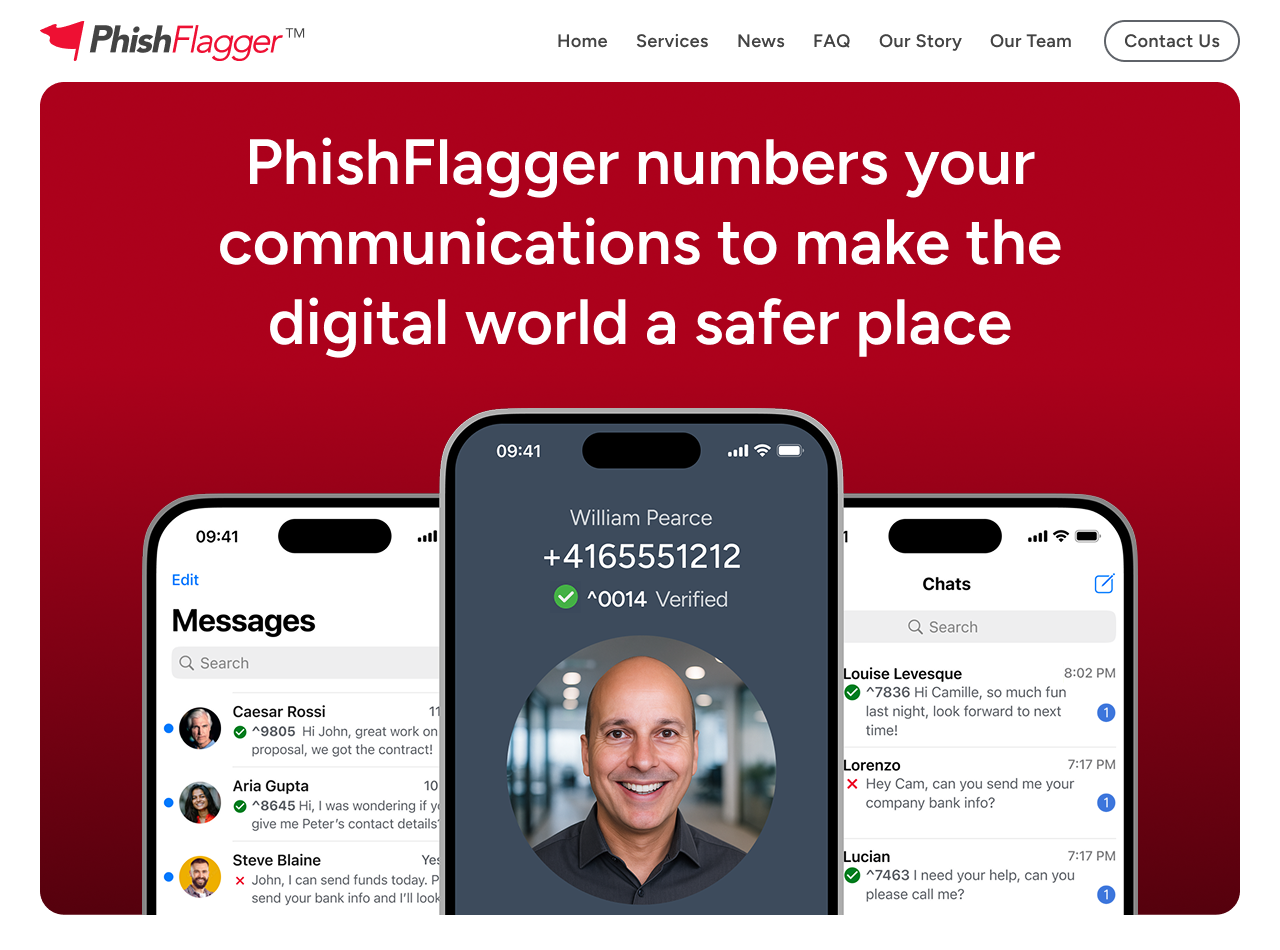
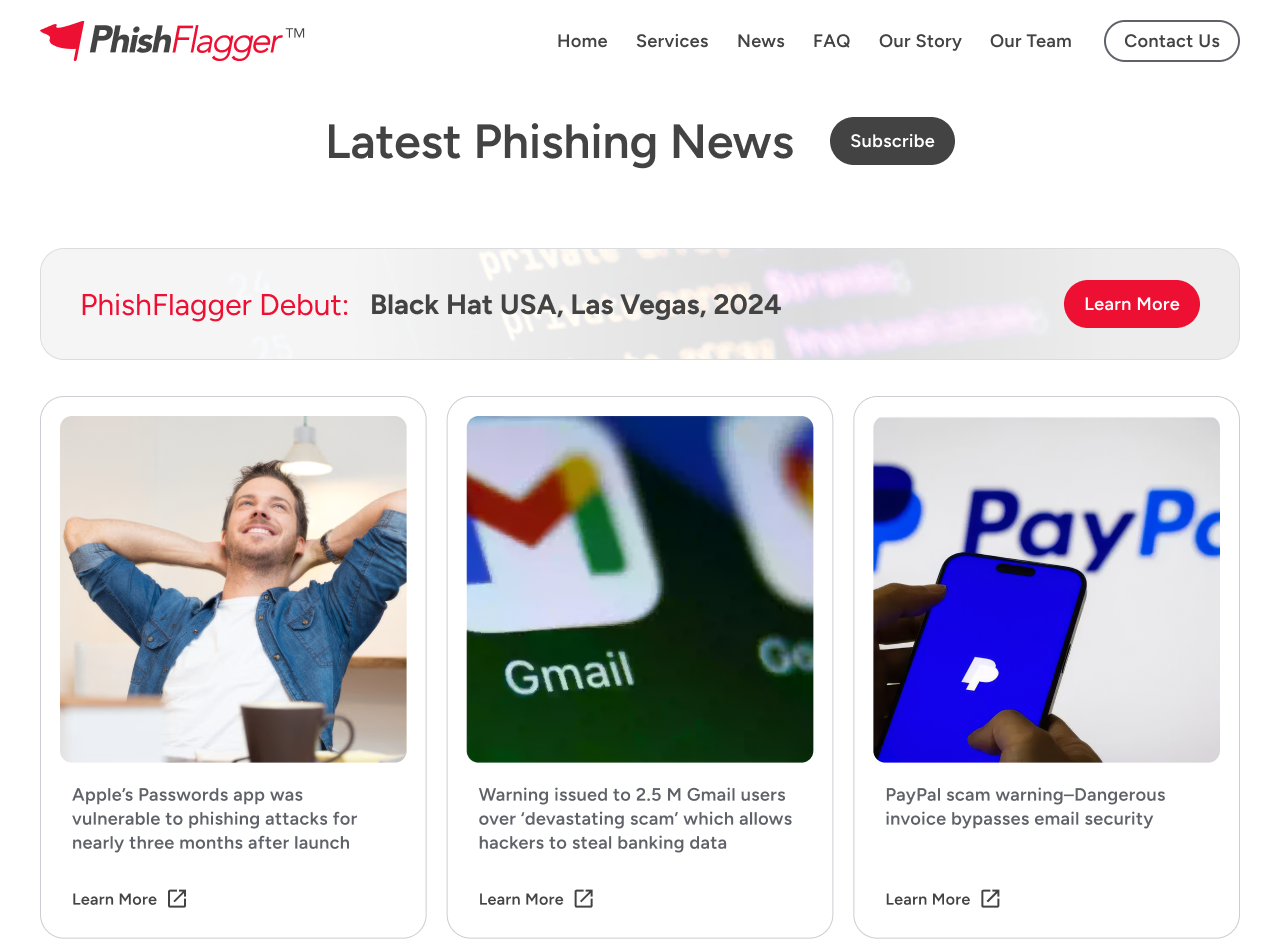
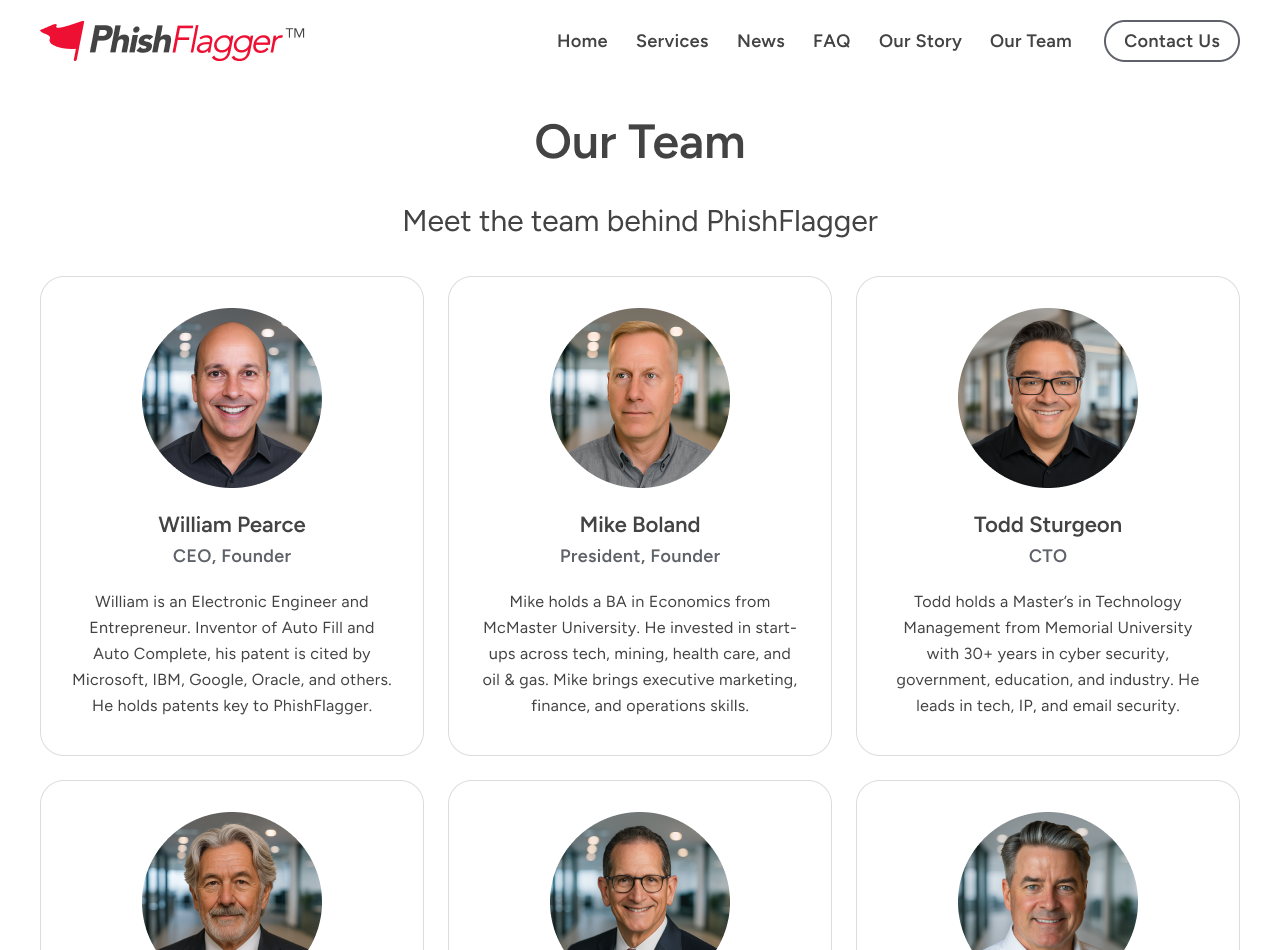
PhishFlagger is a patented system that numbers digital communications to make the online world safer. Their primary focus is preventing email phishing, but they are omni-channel in approach. As an emerging technology, clear communication is essential to building trust and understanding. I provide strategic and hands-on guidance to PhishFlagger's leadership team, including rebranding, marketing materials, photography direction, and the proposed website redesign and copy strategy on display here.
For the redesign, I replaced the previous Framer-based site with a clear, user-friendly experience that explains their mission, services, and protocol. The original site relied heavily on technical jargon; the new approach streamlines content and keeps each page focused on what users need, presented in a friendly, approachable way. The relaunch is planned for spring 2026.
The design system is based on Untitled UI, with custom components added for flexibility. Figtree, an open-source Google font, aligns closely with Aviner from the PhishFlagger logo. The redesign was built in Figma Sites, with Gemini and Photoshop AI supporting planning, text summarization, and image refinement. This work emphasizes content hierarchy, flow, and clarity, showing how AI-assisted design and modern web tools can simplify complex cybersecurity concepts into a user-focused experience.

Multi-breakpoint setup in Figma Make
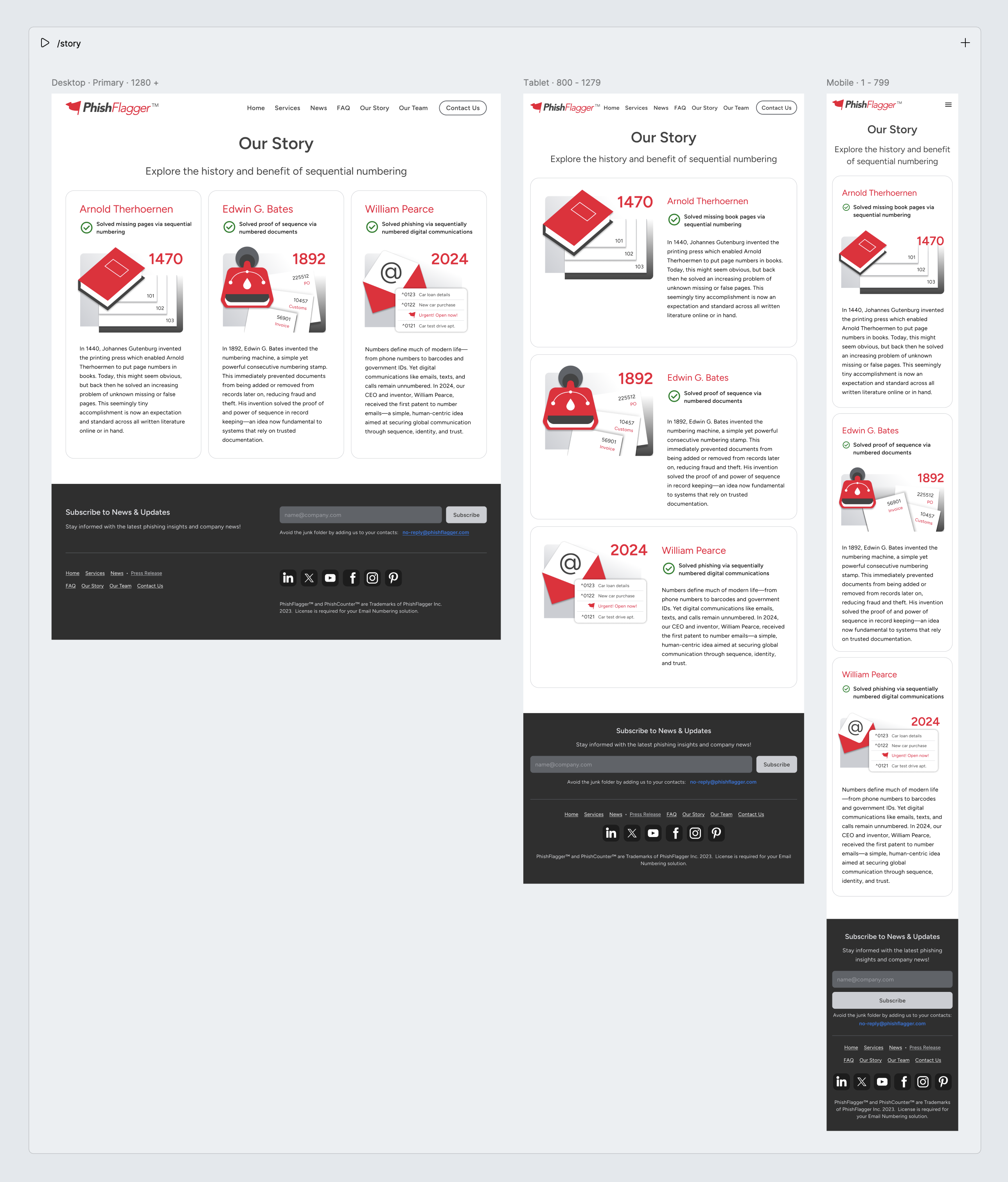
Multi-breakpoint setup in Figma Make
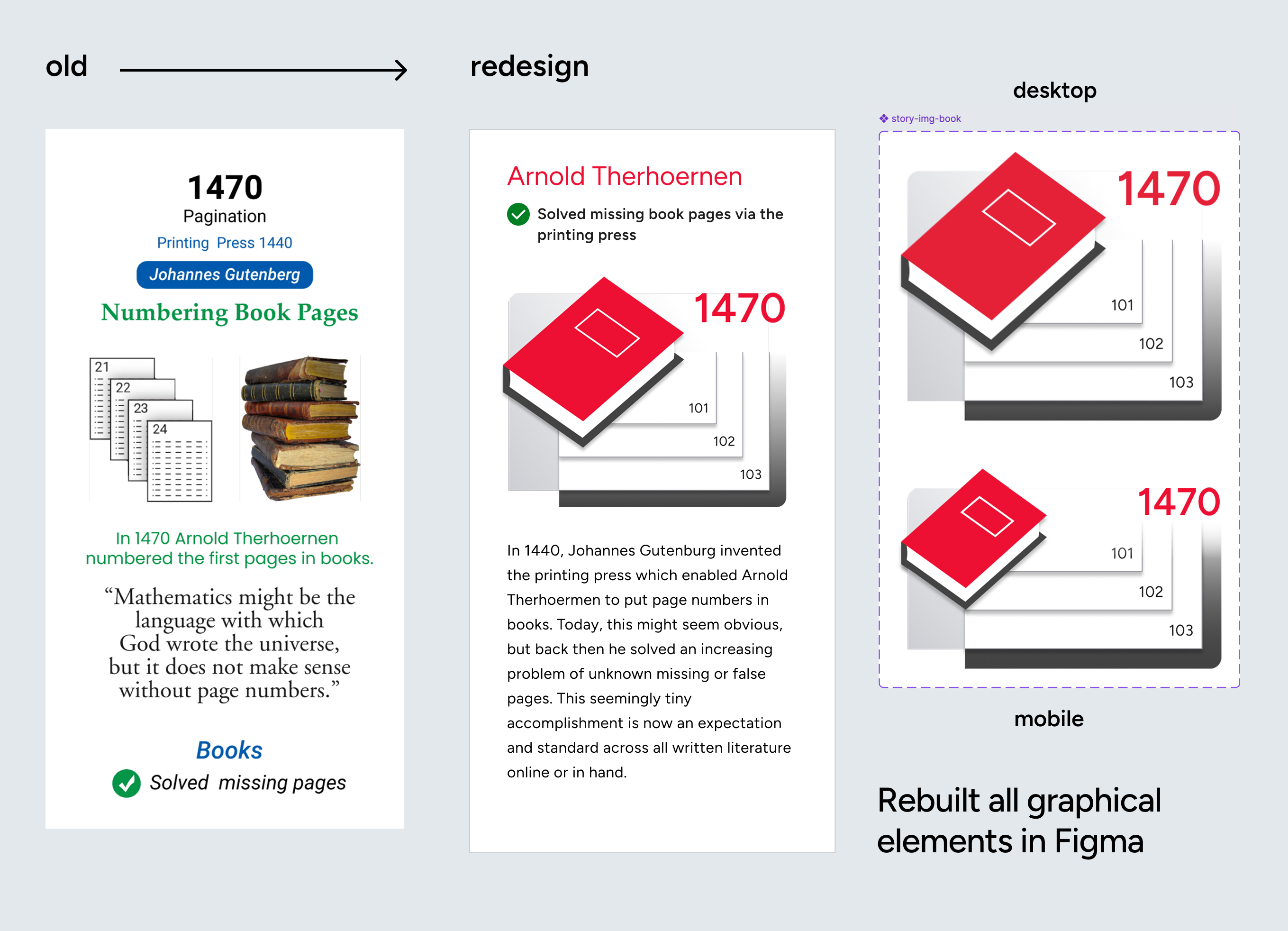
All needed infographics rebuilt and on-brand
All photo creation and AI-assisted editing

All photo creation and AI-assisted editing
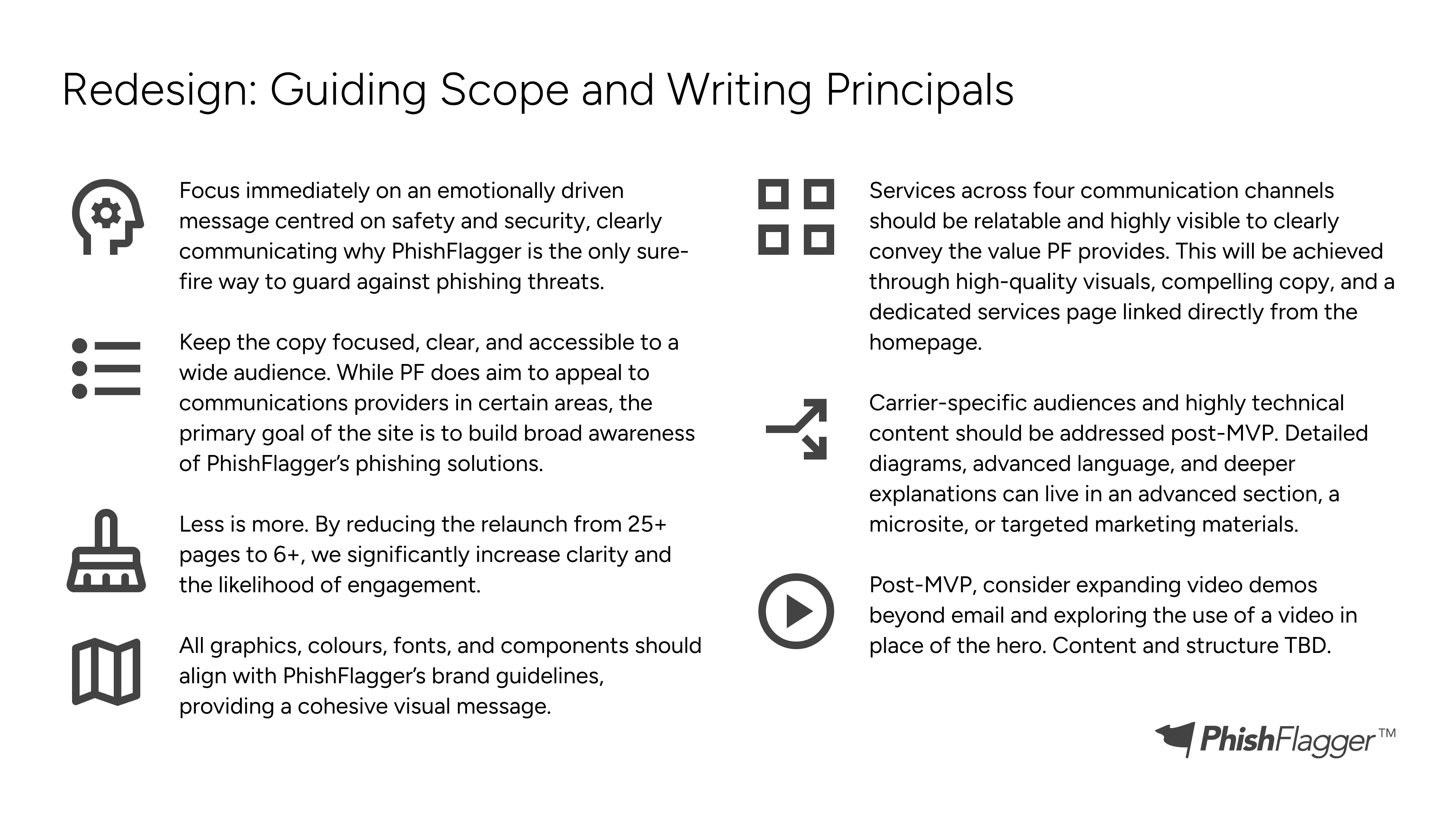
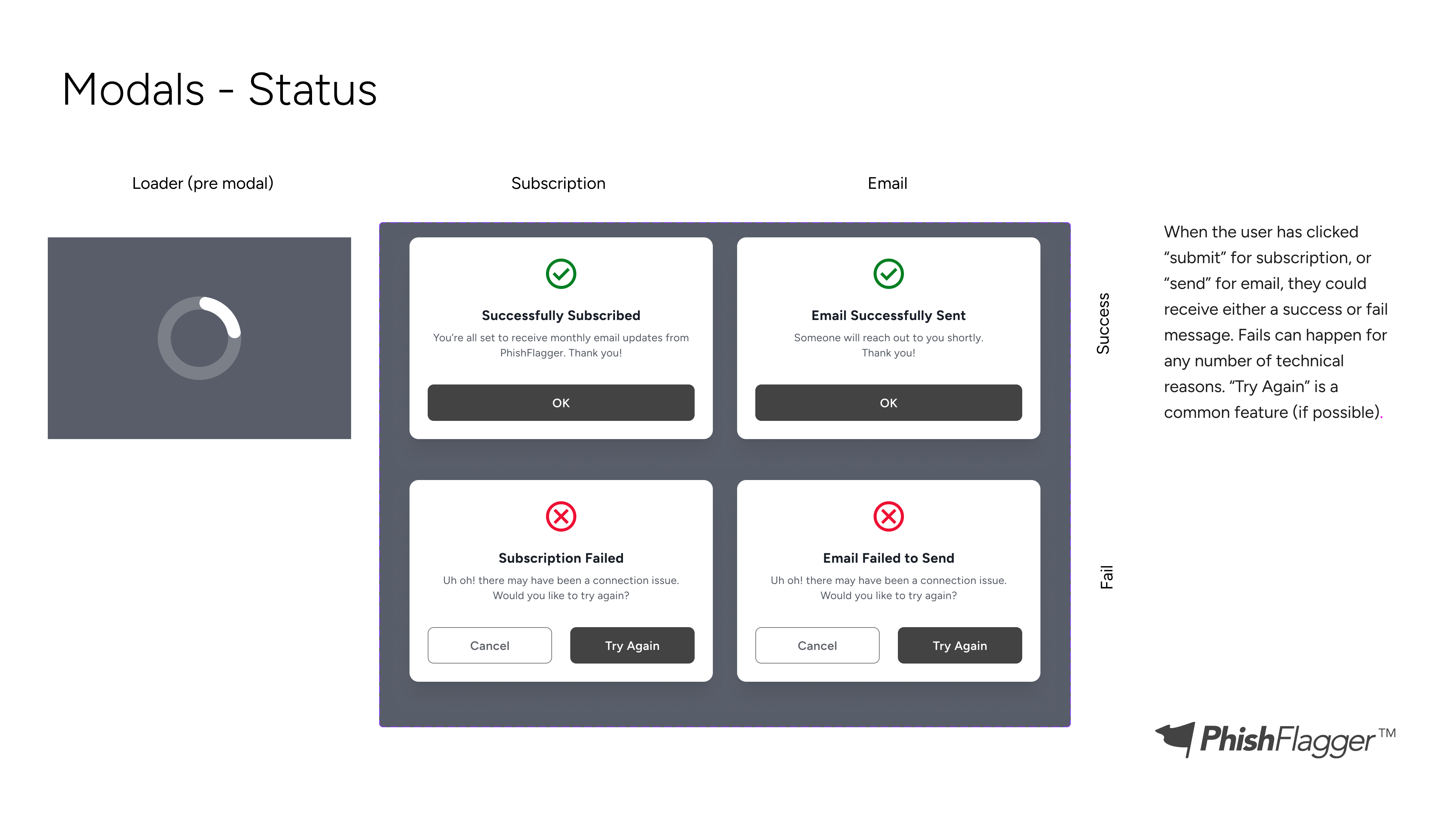
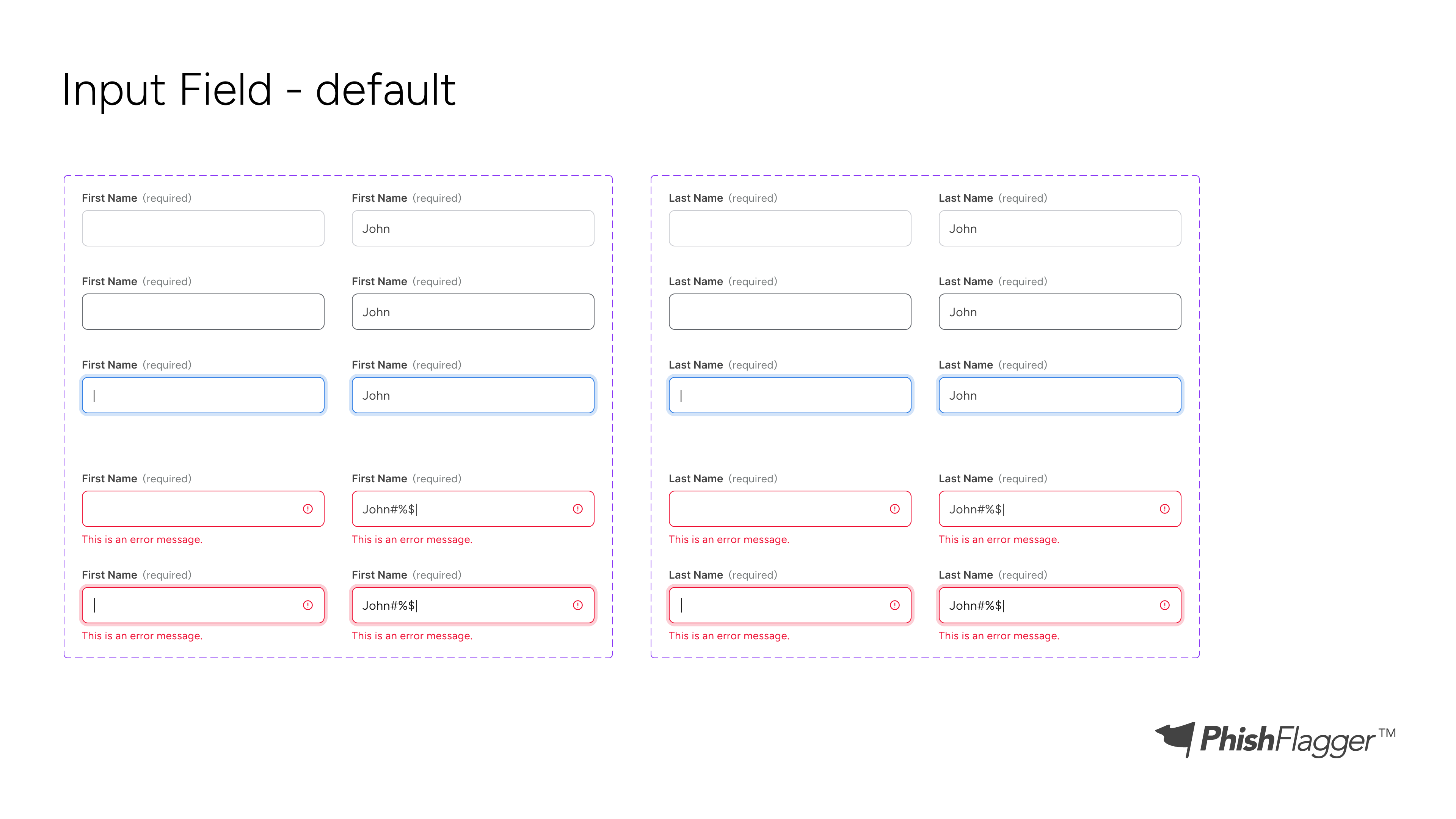
Defined UX process and components
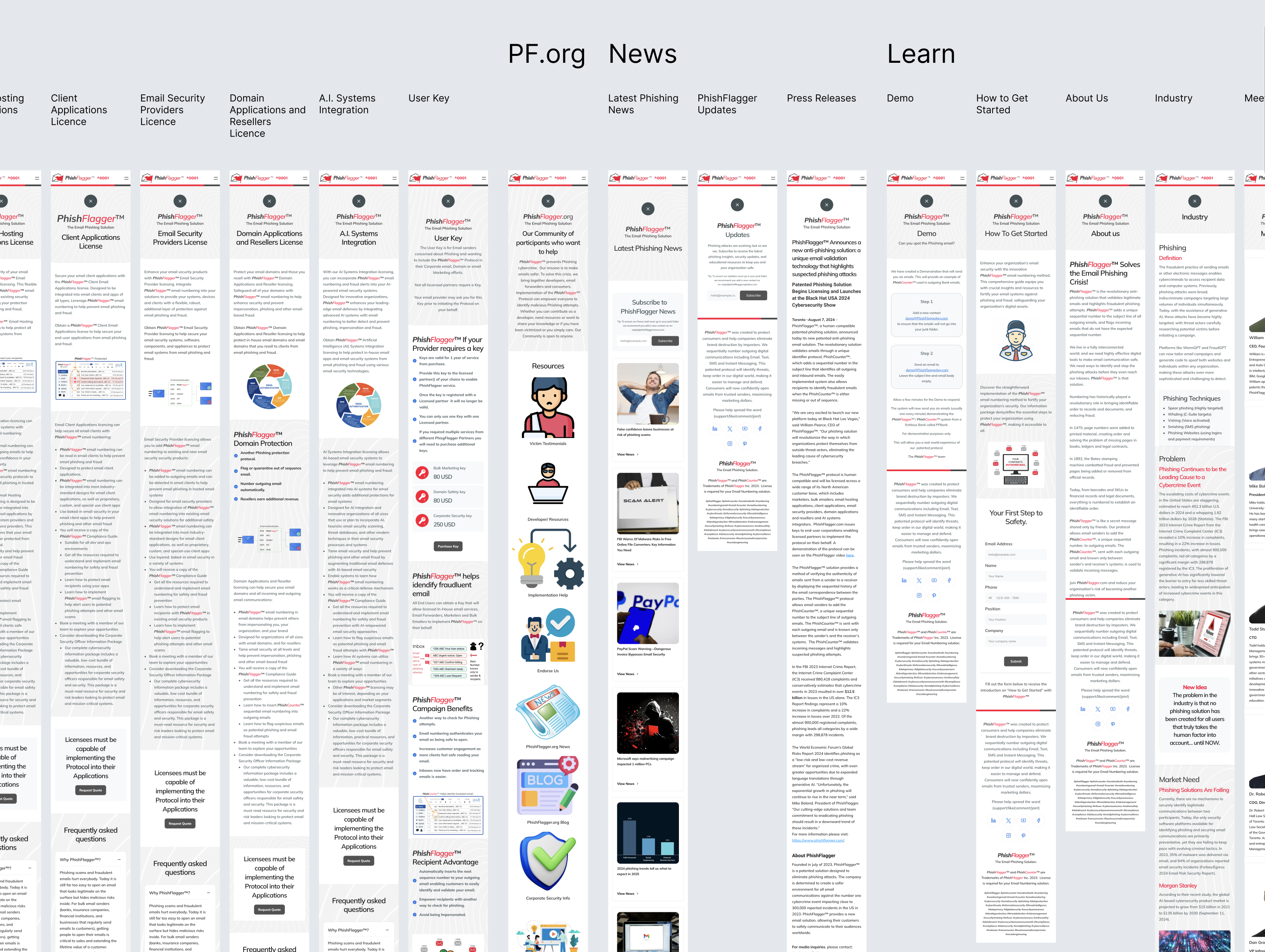
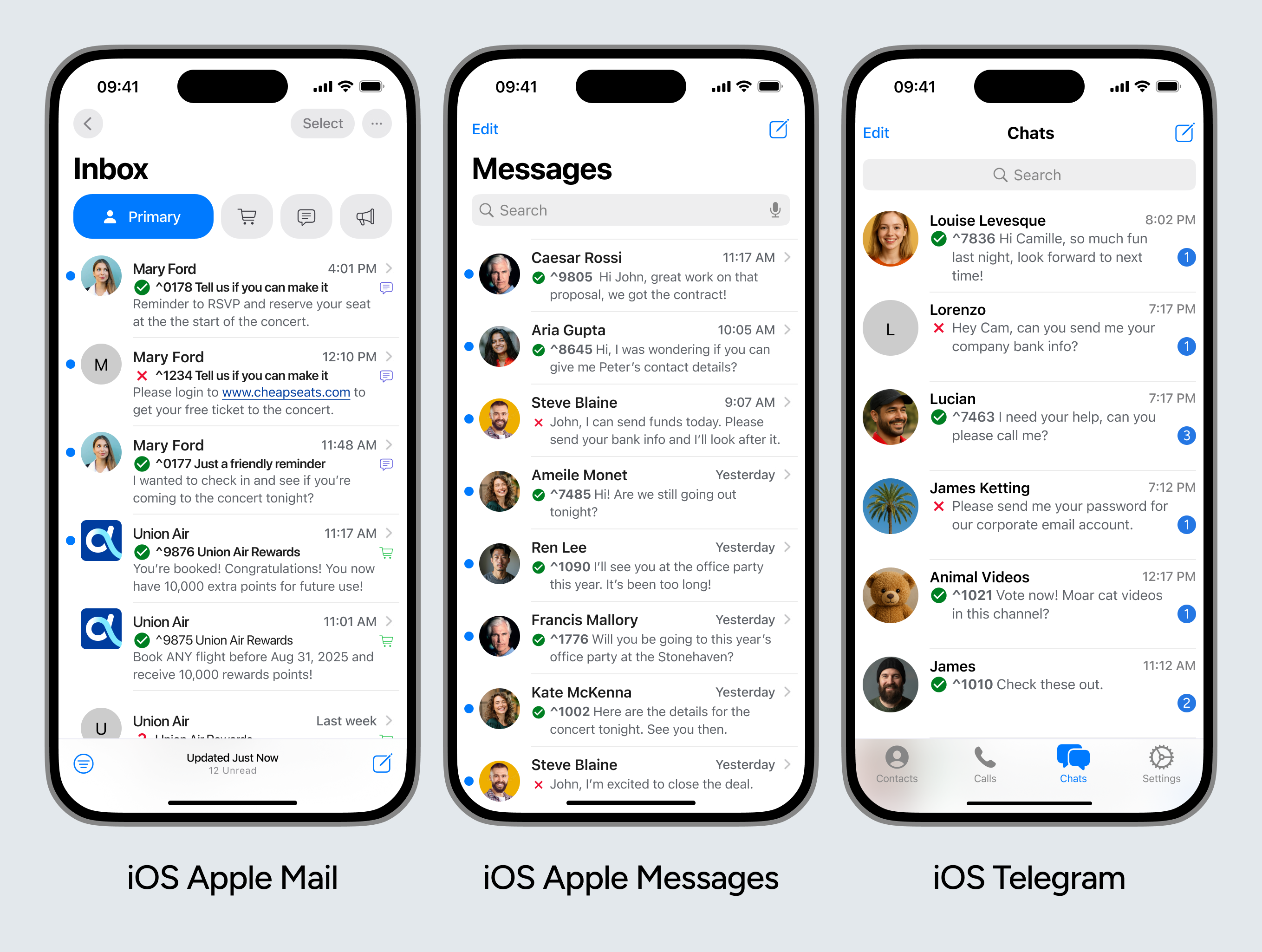
A small sample of the previous complexity to reorganize and simplify
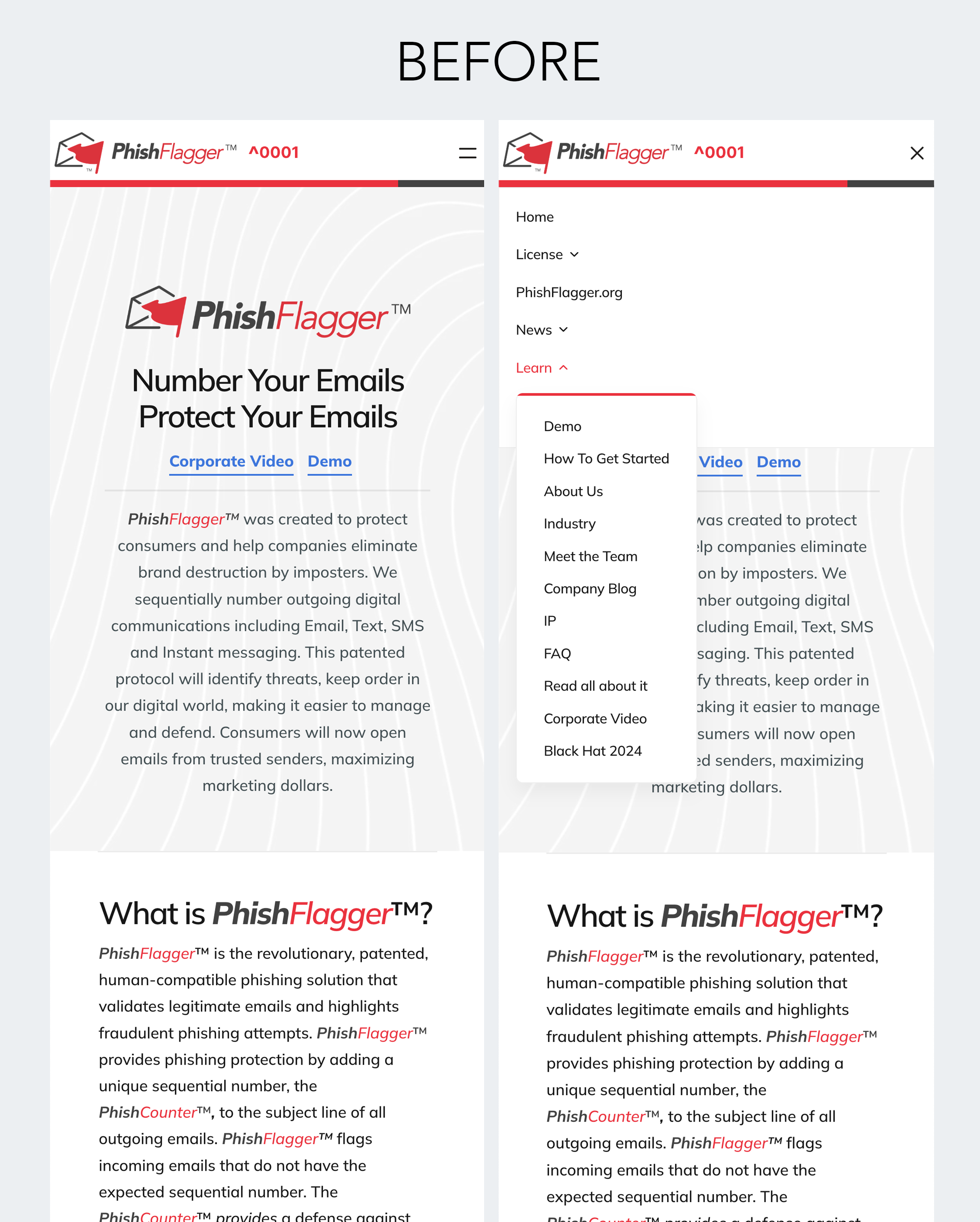
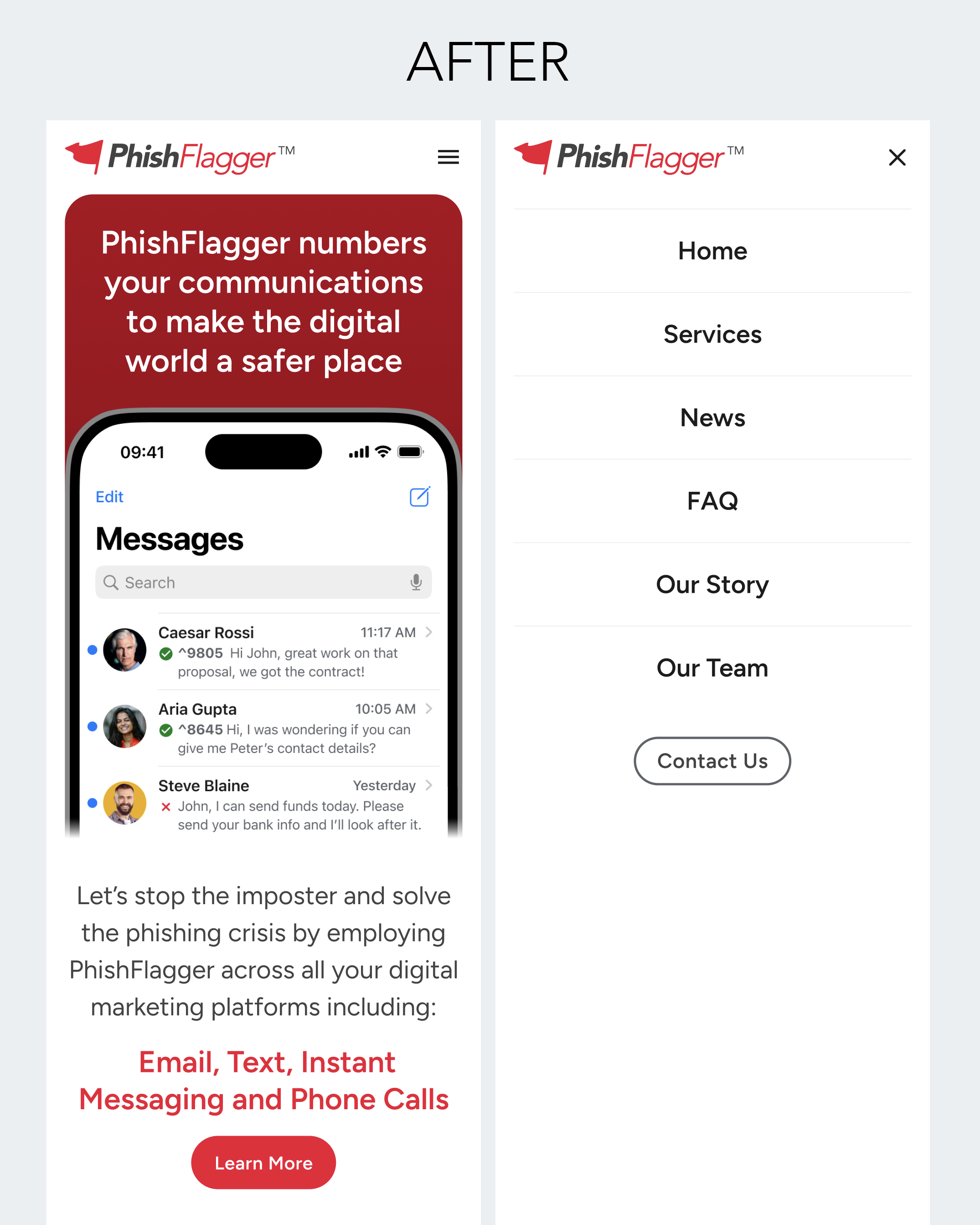
Mobile home and hamburger menu - Before and After

PhishFlagger - Website
PhishFlagger is a patented system that numbers digital communications to make the online world safer. Their primary focus is preventing email phishing, but they are omni-channel in approach. As an emerging technology, clear communication is essential to building trust and understanding. I provide strategic and hands-on guidance to PhishFlagger's leadership team, including rebranding, marketing materials, photography direction, and the proposed website redesign and copy strategy on display here.
For the redesign, I replaced the previous Framer-based site with a clear, user-friendly experience that explains their mission, services, and protocol. The original site relied heavily on technical jargon; the new approach streamlines content and keeps each page focused on what users need, presented in a friendly, approachable way. The relaunch is planned for spring 2026.
The design system is based on Untitled UI, with custom components added for flexibility. Figtree, an open-source Google font, aligns closely with Aviner from the PhishFlagger logo. The redesign was built in Figma Sites, with Gemini and Photoshop AI supporting planning, text summarization, and image refinement. This work emphasizes content hierarchy, flow, and clarity, showing how AI-assisted design and modern web tools can simplify complex cybersecurity concepts into a user-focused experience.
Title:
Creative Consultant / Director
Tenure Duration:
Ongoing advisor
Project Duration:
Summer/Fall 2025
Achievement Overview
Various desktop examples
Multi-breakpoint setup in Figma Make
Multiple mobile templates created for service demonstration
All needed infographics rebuilt and on-brand
All photo creation and AI-assisted editing
Defined UX process and components
A small sample of the previous complexity to reorganize and simplify
Mobile home and hamburger menu - Before and After
PhishFlagger - Website
Detailed case study and demo link are coming soon.
PhishFlagger is a patented system that numbers digital communications to make the online world safer. Their primary focus is preventing email phishing, but they are omni-channel in approach. As an emerging technology, clear communication is essential to building trust and understanding. I provide strategic and hands-on guidance to PhishFlagger's leadership team, including rebranding, marketing materials, photography direction, and the proposed website redesign and copy strategy on display here.
For the redesign, I replaced the previous Framer-based site with a clear, user-friendly experience that explains their mission, services, and protocol. The original site relied heavily on technical jargon; the new approach streamlines content and keeps each page focused on what users need, presented in a friendly, approachable way. The relaunch is planned for spring 2026.
The design system is based on Untitled UI, with custom components added for flexibility. Figtree, an open-source Google font, aligns closely with Aviner from the PhishFlagger logo. The redesign was built in Figma Sites, with Gemini and Photoshop AI supporting planning, text summarization, and image refinement. This work emphasizes content hierarchy, flow, and clarity, showing how AI-assisted design and modern web tools can simplify complex cybersecurity concepts into a user-focused experience.
Title:
Creative Consultant / Director
Tenure Duration:
Ongoing advisor
Project Duration:
Summer/Fall 2025
Various desktop examples
Multi-breakpoint setup in Figma Make
Multiple mobile templates created for service demonstration
All needed infographics rebuilt and on-brand
All photo creation and AI-assisted editing
Defined UX process and components
A small sample of the previous complexity to reorganize and simplify
Mobile home and hamburger menu - Before and After